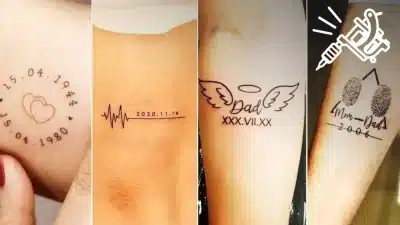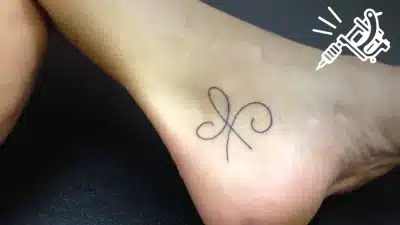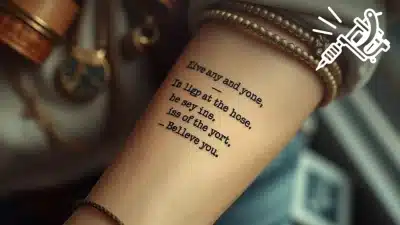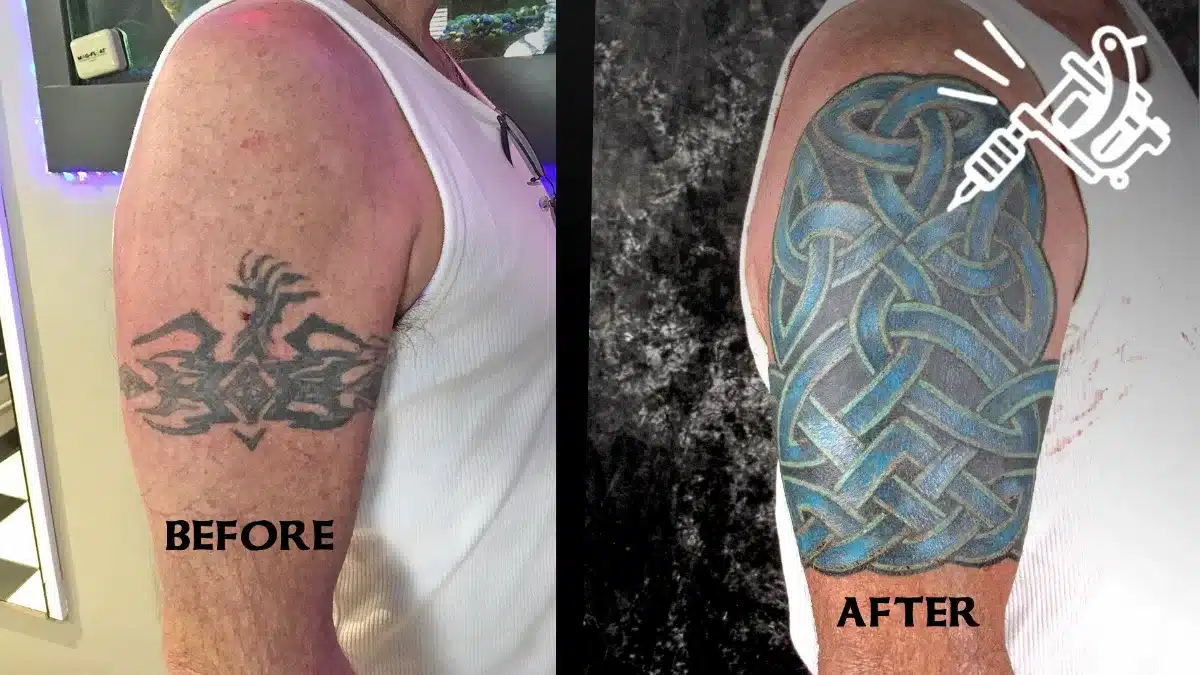
Whether it’s a name you outgrew or a faded piece from the early 2000s, a cover-up tattoo can be the reset button your skin story deserves. These impressive transformations prove that with the right artist, even the most regrettable ink can turn into something striking.
10 Before-and-After Cover-Up Wins
A successful cover-up doesn’t erase history — it reimagines it. Here are ten real-world examples turning tattoo regrets into wins, with proof that artistry and intent make all the difference.
From Tribal to Botanical
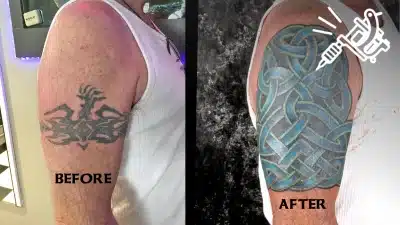
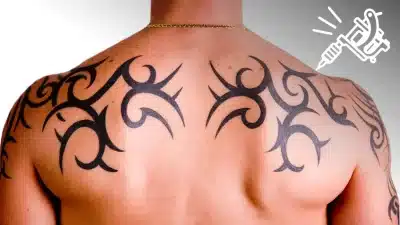
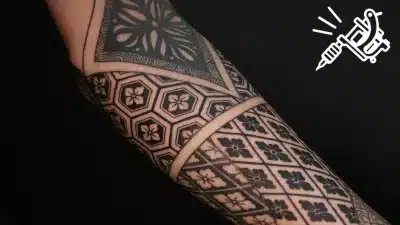
Thick black tribal bands once signaled rebellion — now they’re often personal design detours. One client worked with an artist to morph an outdated arm band into a full botanical wrap featuring peonies, vine work, and shadowed leaves for depth.
The Name You Wish You Never Inked
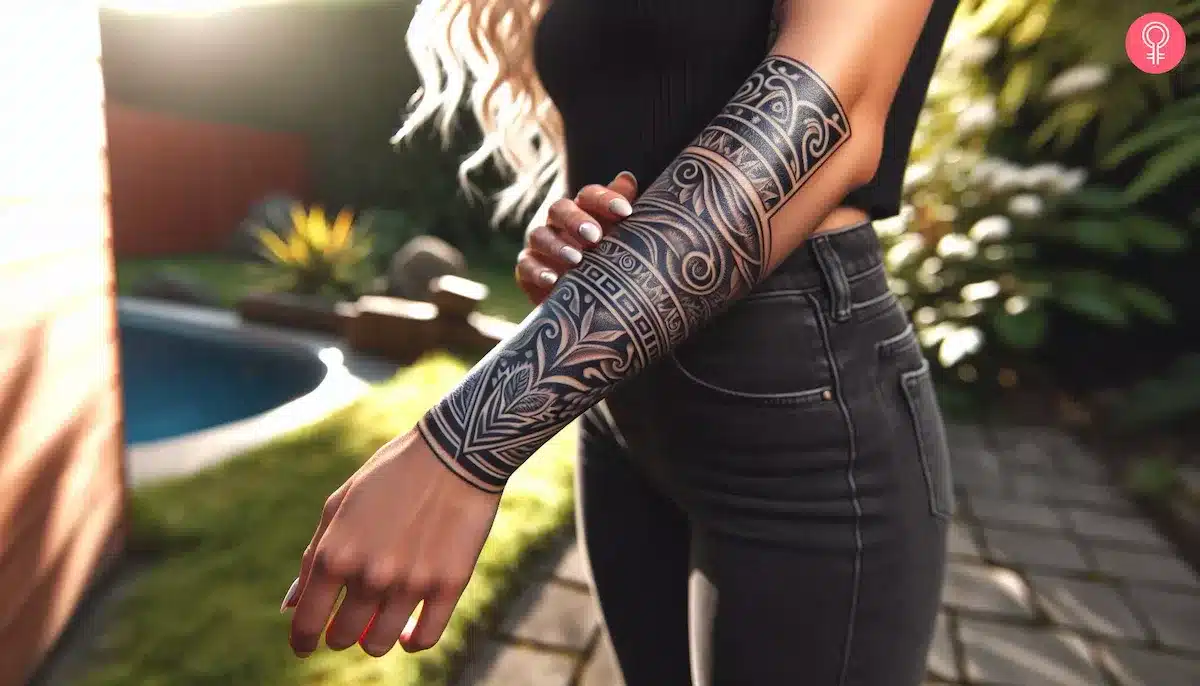
Names are personal; unfortunately, some are not permanent in our lives. A bold wrist name tattoo was transformed into a textured moth, using wings to blur old lettering while adding rich detail and a deep brown-gray palette.
Faded Color Into Fine Blackwork
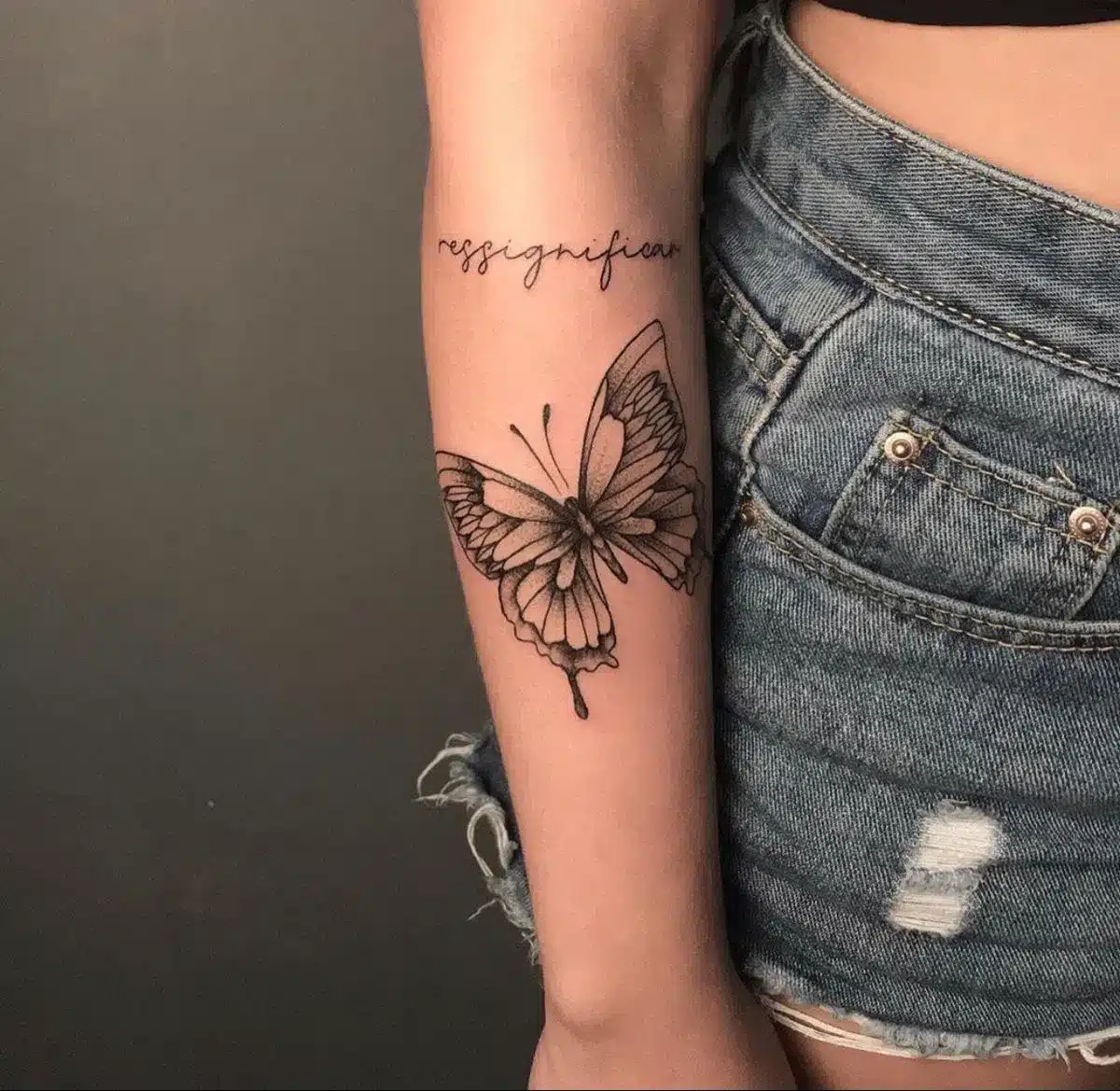
An old rainbow dolphin piece — bright in the 90s, now washed in uneven pastels — was covered with a blackwork serpent eating its tail (an ouroboros). The new piece used bold lines and geometric shading to pull attention away from the original.
Script to Skull
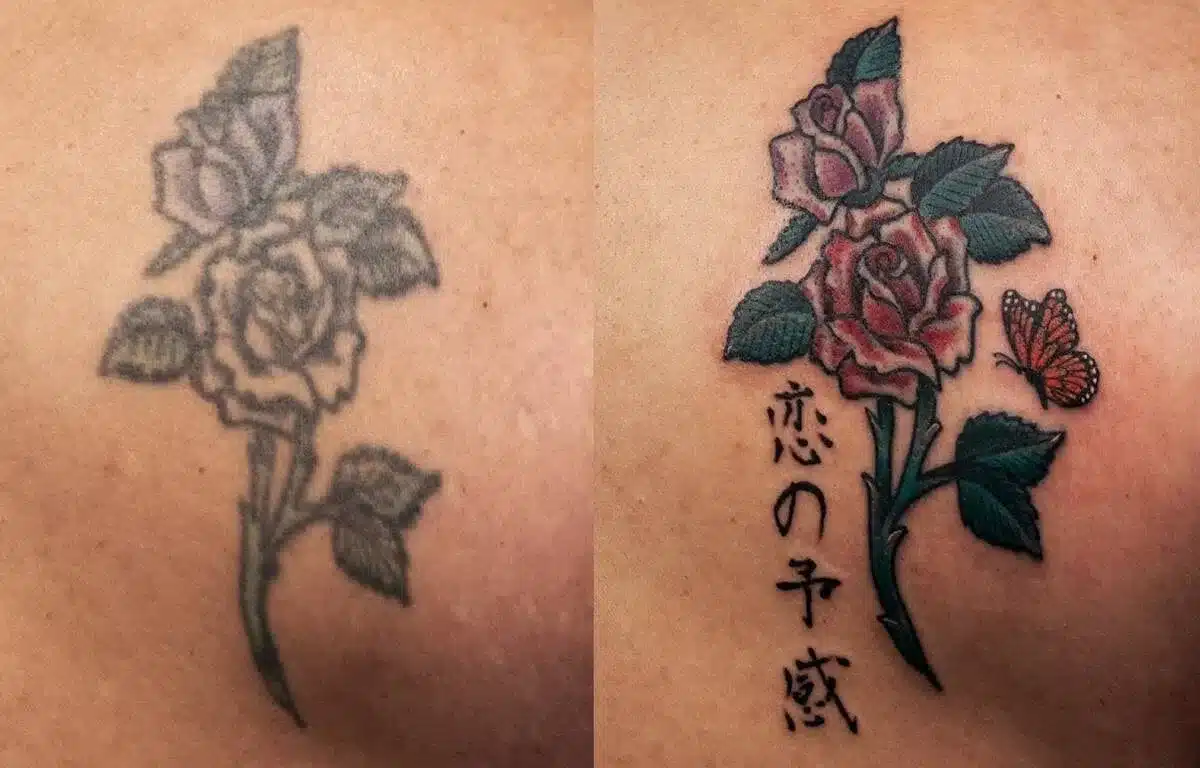
Once a romantic quote, later a reminder of heartbreak — the script was large, but so was the potential. The artist layered high-contrast skull and rose imagery across the shoulder in grayscale, blending the old words into dark shadows of the new piece.
Minimal to Maximal
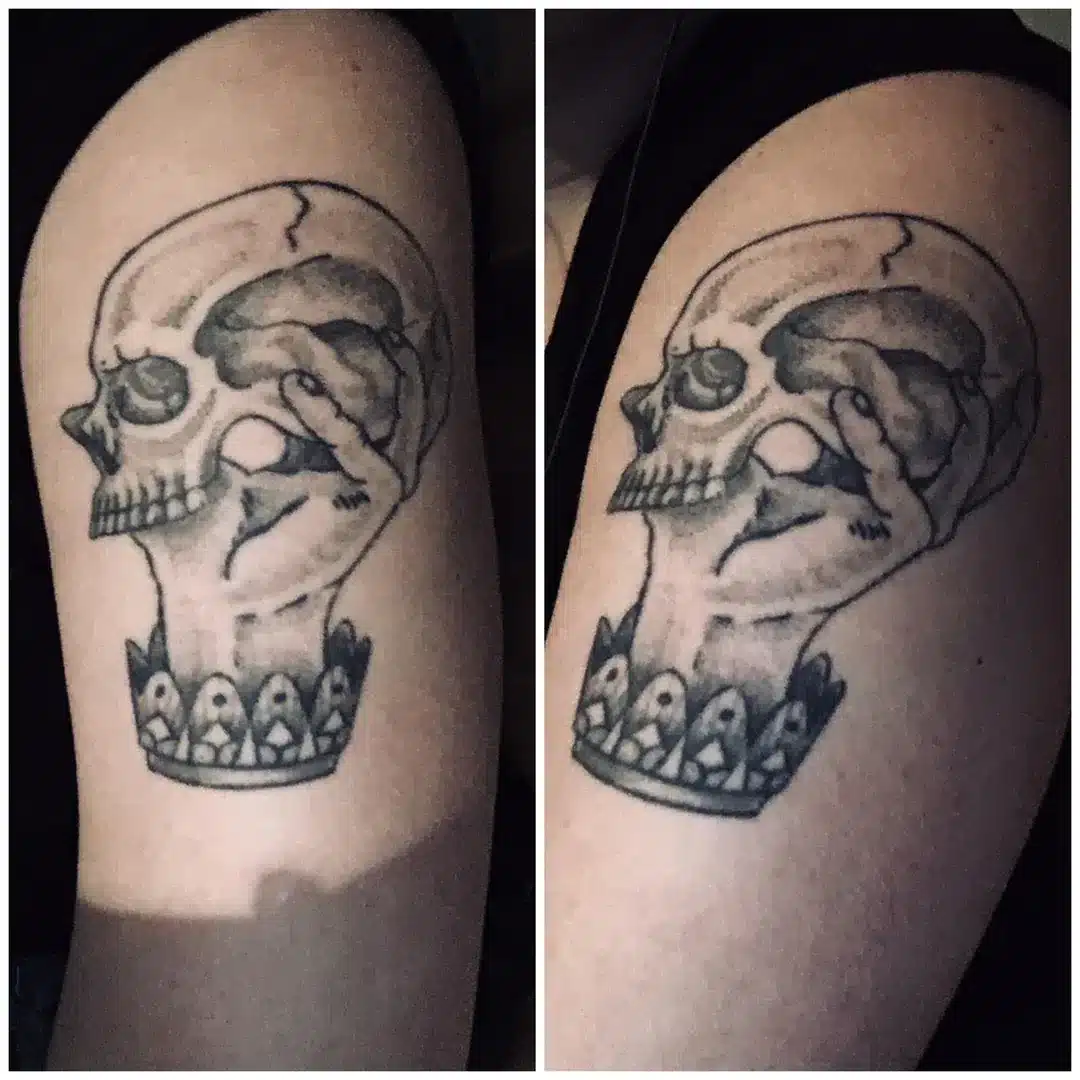
A tiny, crooked stick-and-poke moon was the starting point. The request? More detail, more cohesion. The end result was a micro-realistic celestial cluster: moon phases, stars, and orbit lines that absorbed the old ink entirely.
Cartoon Ink, Reclaimed
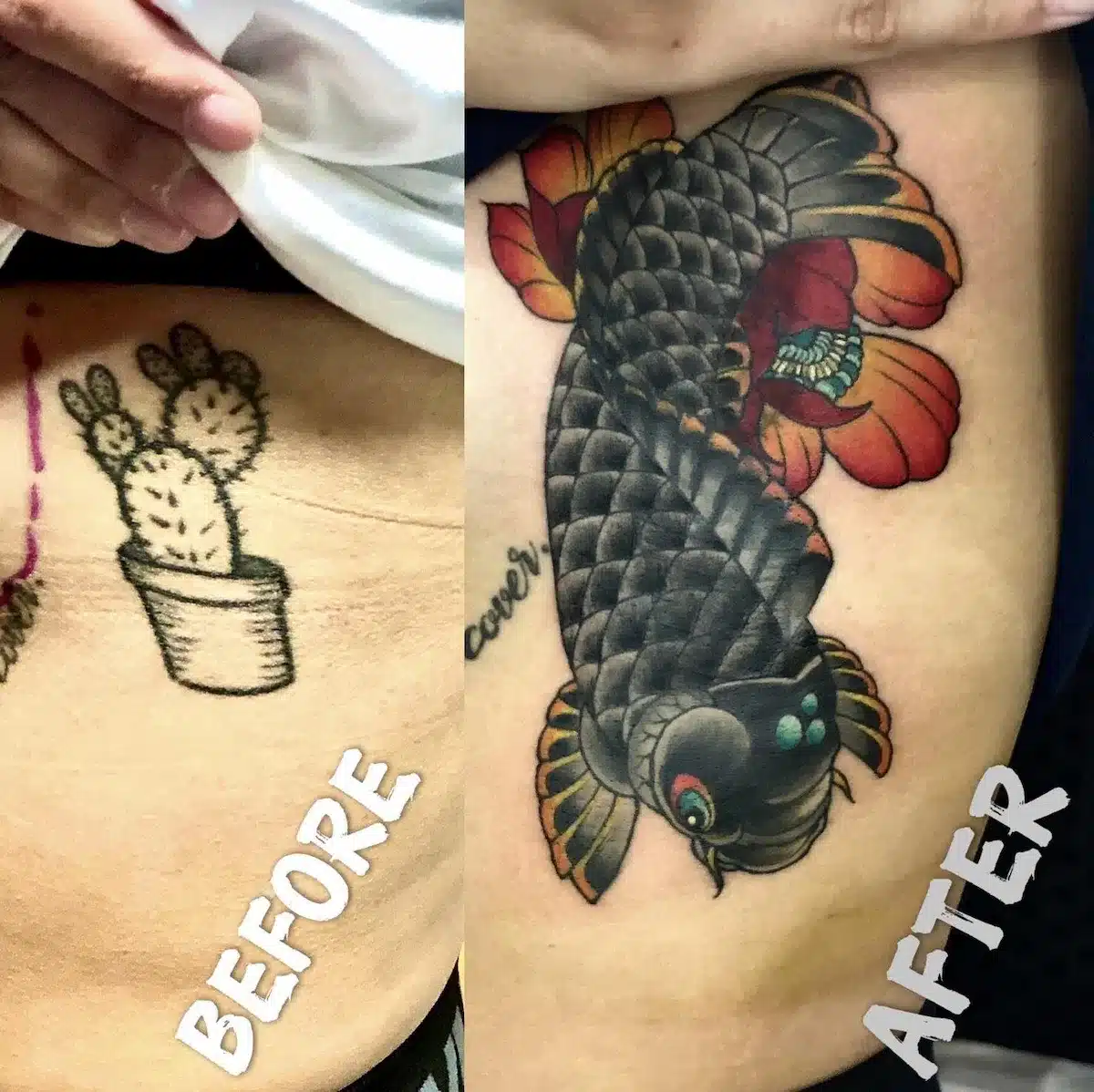
That cartoon character from childhood? It aged faster than expected. A back-of-calf Tweety Bird became the base for a moody Japanese koi fish, swimming through stylized waves and cherry blossoms — with strategic color blocking to fully erase the yellow ink.
Cross to Compass
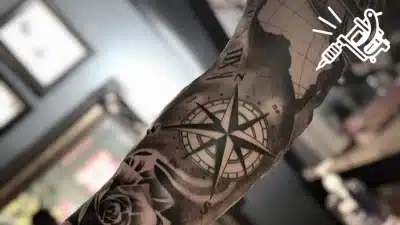
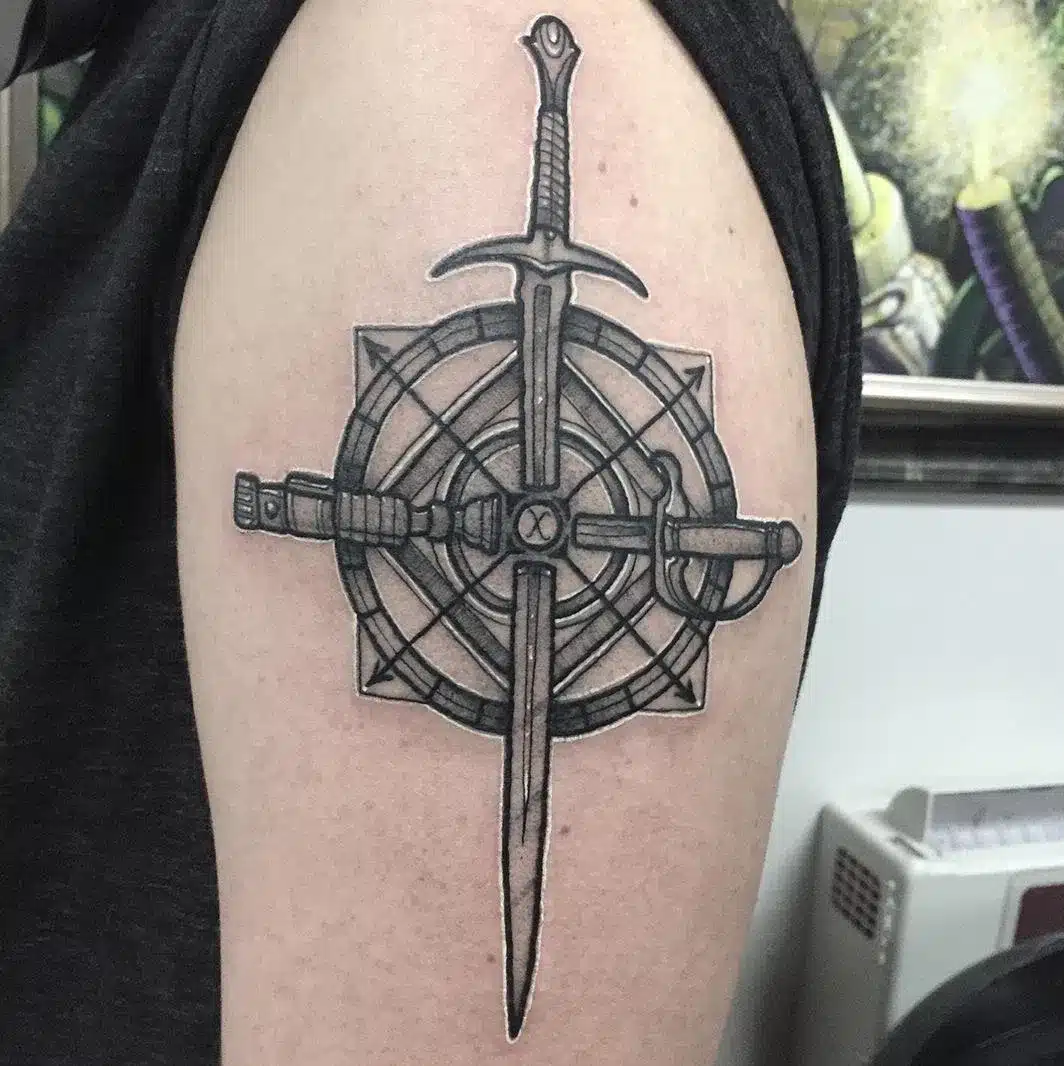
A faded cross on the upper arm, done hastily in college, found new meaning as a symbolic compass. Using black and muted rust tones, the artist turned religious imagery into a directional mandala with hand-poke-style detailing.
Flames to Forest
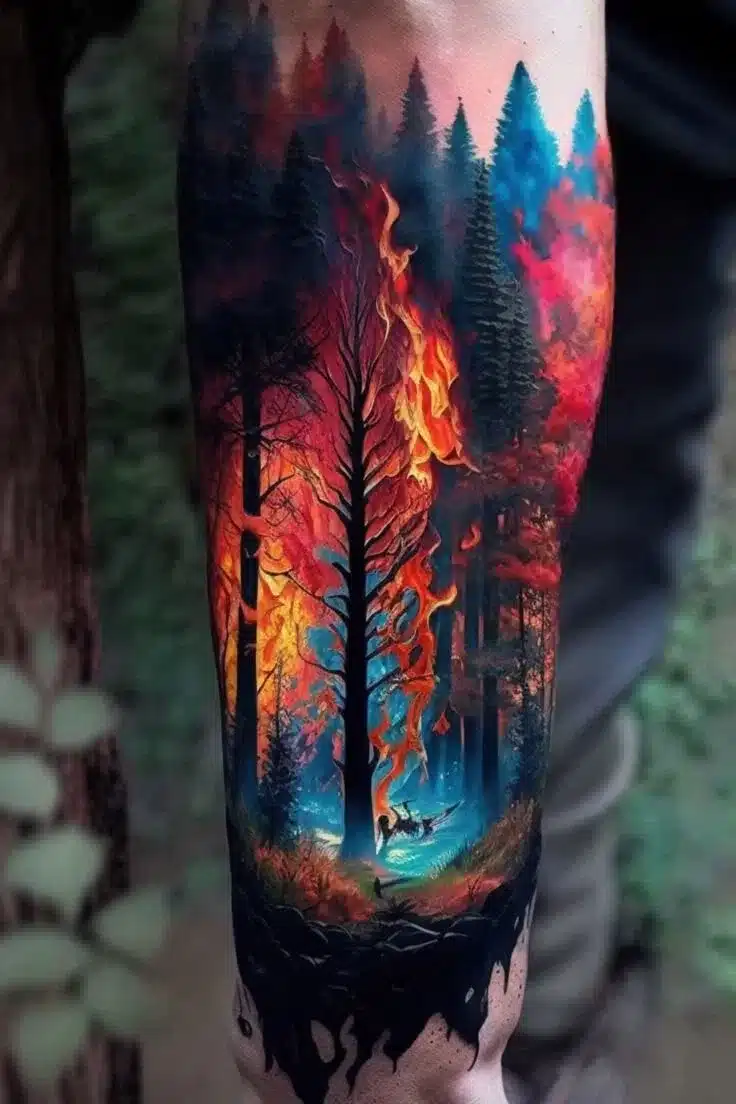
What started as fiery ankle flames (a trend in the early 2000s) turned into a serene pine forest using soft shading and upward lines to elongate the leg. A distant mountain silhouette completed the scene and obscured solid blocks of color from the original.
Barcode to Bird
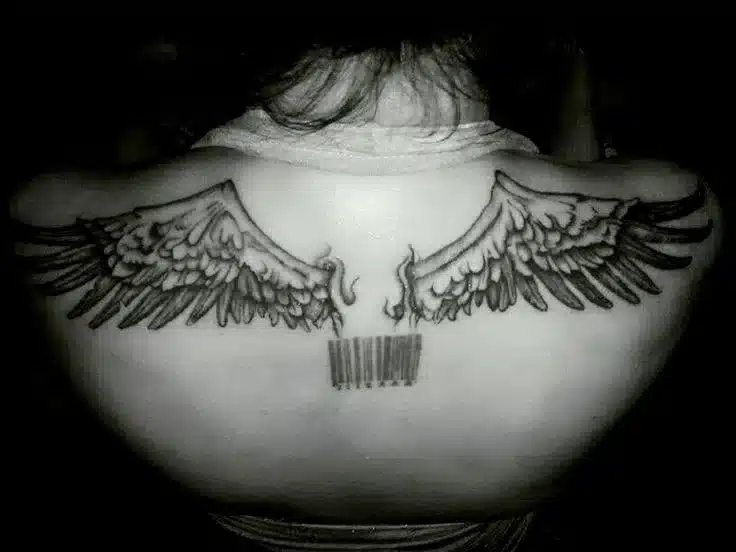
Back-of-neck barcodes once symbolized rebellion — now they’re classic cover-up candidates. One was reworked into an in-flight raven, with wings that spanned and blurred old lines while preserving skin tone contrast to suggest motion.
DIY Disaster, Redesigned
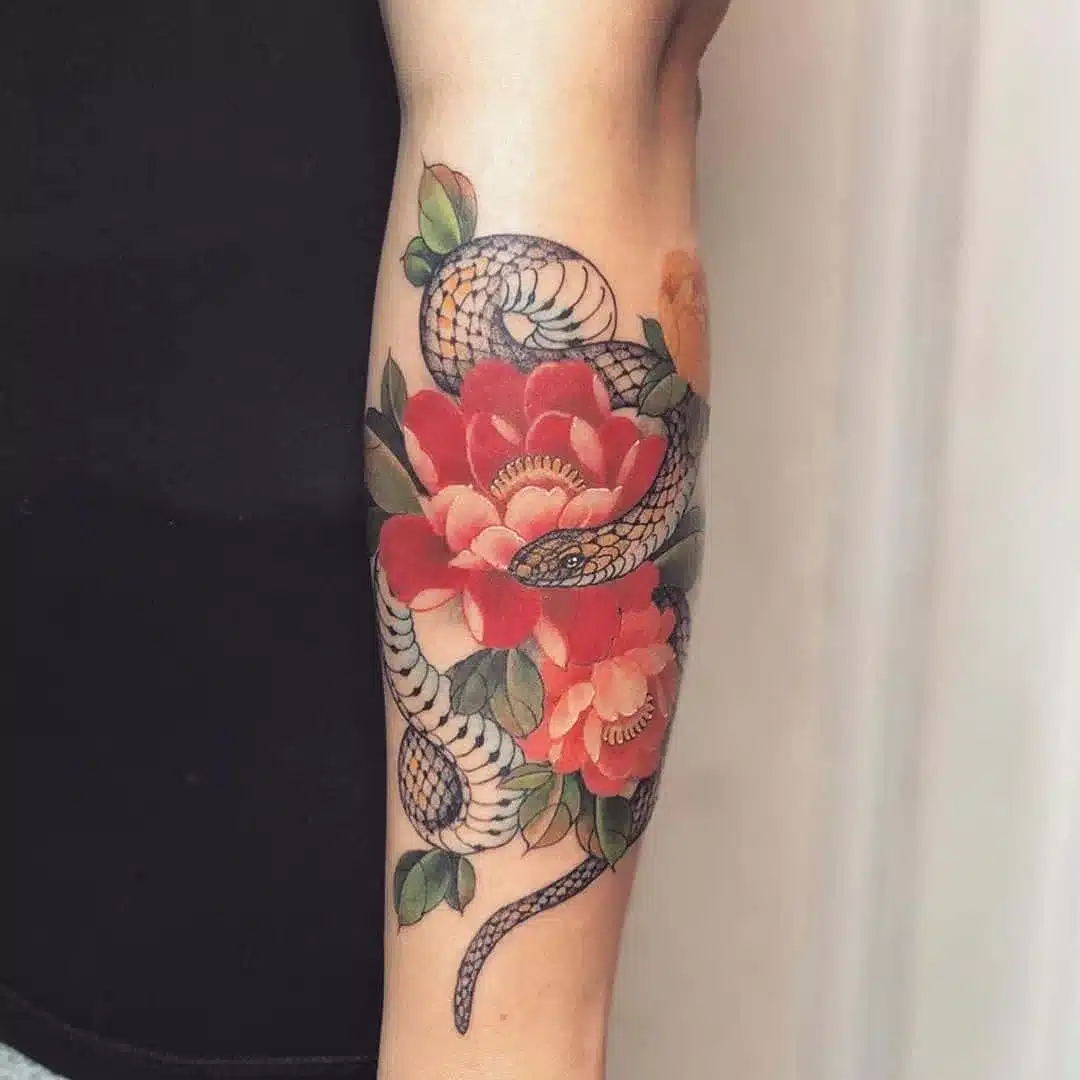
A self-done forearm tattoo — jagged lettering with uneven lines — was reimagined as a traditional snake-and-dagger motif. Bold reds and blacks covered irregular shapes, and the coiling snake offered natural concealment for troublesome spots.
Cover-up tattoos are more than just makeovers — they’re lived-in proof that ink evolves with us. With the right artist and creative vision, past regrets can become proud reinventions.